Home
Home- Research
Viruses enter host cells, replicate by using host-cell functions, evade host antiviral defense mechanisms, and are eventually released from cells. By dissecting the interactions between viral and host factors, we aim to understand how viruses replicate and cause disease and to elucidate the underlying molecular mechanisms.
1. Molecular mechanisms underlying virus-induced cellular remodeling
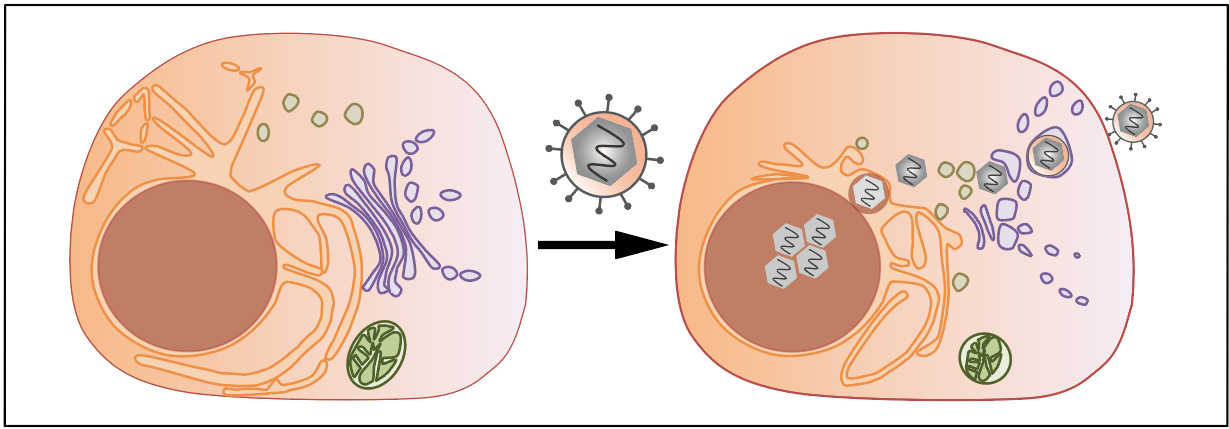
Virus-infected cells undergo extensive remodeling of intracellular organelles, the cytoskeleton, membrane structures, and intracellular signaling pathways. For example, some antiviral factors are sequestered in specific cytoplasmic regions, allowing viruses to evade these antiviral defenses. Herpesviruses are medically important pathogens that establish lifelong latent infections in humans and cause various diseases upon reactivation. We mainly focus on herpesviruses and study the molecular mechanisms by which viral factors induce these dramatic cellular changes, as well as how these changes contribute to viral replication and pathogenesis.
2. Vesicle-mediated nuclear export
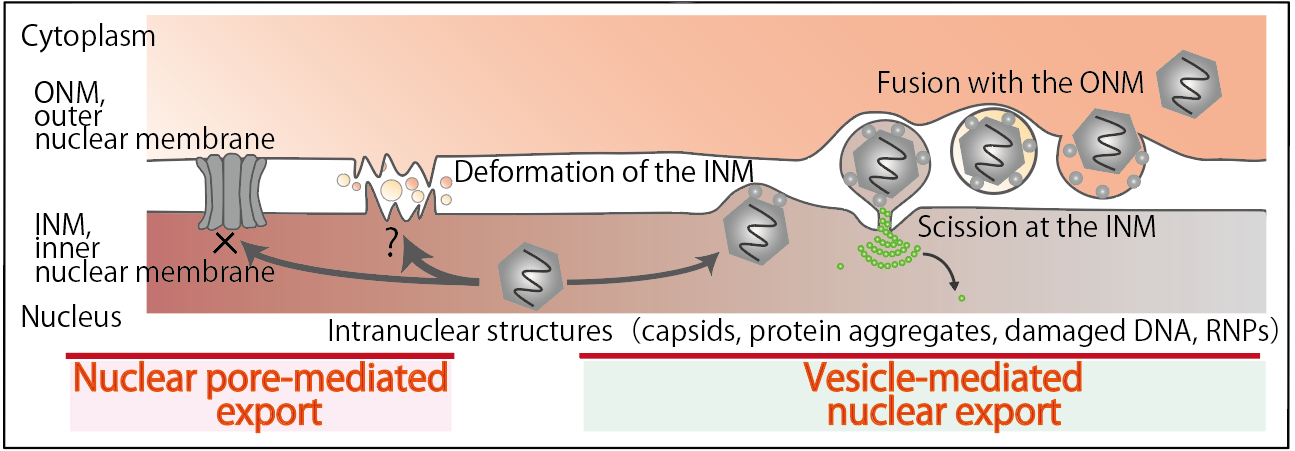
Nuclear materials are generally transported to the cytoplasm through nuclear pores. In herpesvirus-infected cells, however, capsids—shell-like structures formed in the nucleus that enclose the viral genome—are transported to the cytoplasm, where viral particles are completed, via vesicles derived from the nuclear envelope. Evidence is accumulating that this vesicle-mediated nuclear export pathway is also used in uninfected cells, including for the nuclear export of large ribonucleoprotein complexes (RNPs) composed of RNA and proteins and for the removal of abnormal inner nuclear membrane proteins. However, the molecular mechanisms underlying this process remain poorly understood. By comparing virus-infected and uninfected cells, we aim to elucidate the molecular mechanisms of vesicle-mediated nuclear export.
3. Molecular basis of RNA virus replication and pathogenicity
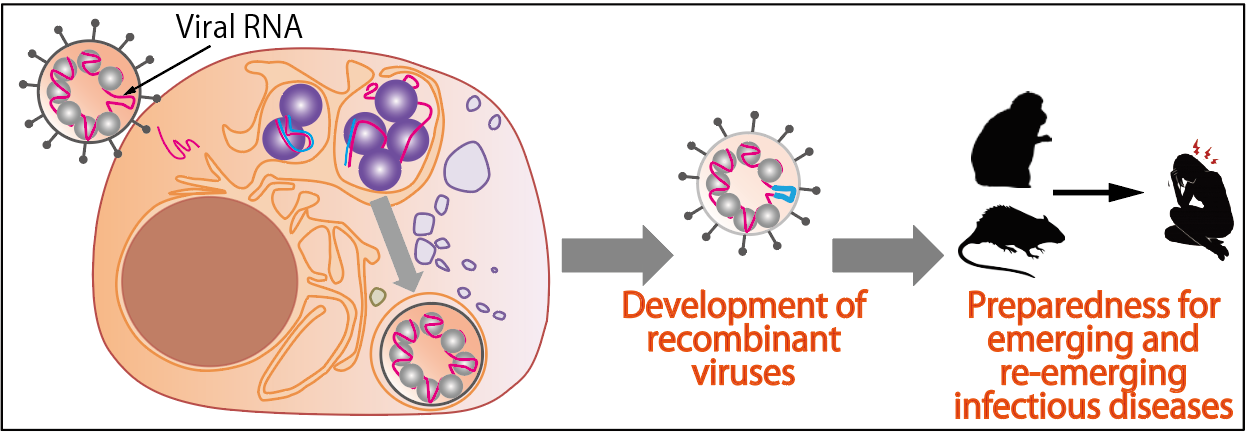
RNA viruses have repeatedly emerged or re-emerged as major causes of infectious diseases. We study the mechanisms by which RNA viruses replicate and cause disease. We also use the experimental platforms and technologies developed through this work to generate recombinant viruses capable of efficient gene expression. Together, these efforts will help us prepare for future threats posed by emerging and re-emerging infectious diseases.
4. Host responses to pathogen infection
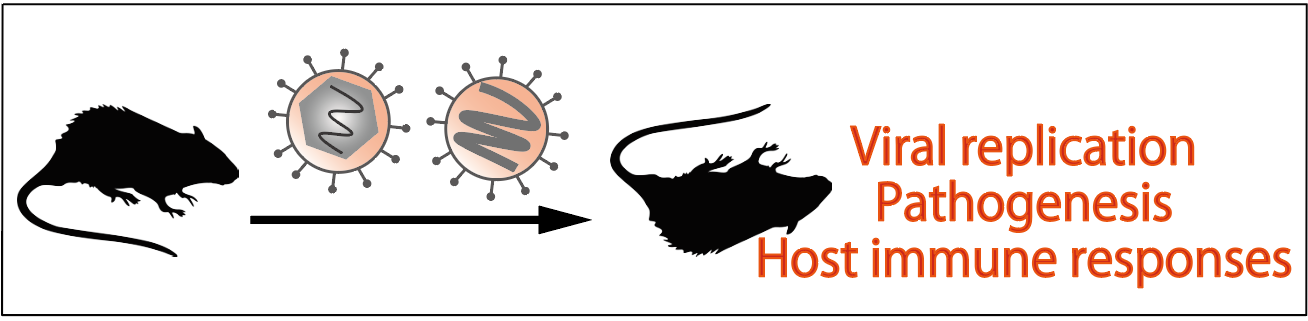
Mouse infection models are essential tools for analyzing disease mechanisms that cannot be studied directly in humans and for advancing drug development. We use mouse infection models to investigate interactions between pathogens and hosts, as well as host responses to infection. We are also working to establish new infection models. These infection models will help us understand disease mechanisms and will also be useful for evaluating and identifying antiviral agents.
5. Structural basis of interactions between viral and host factors
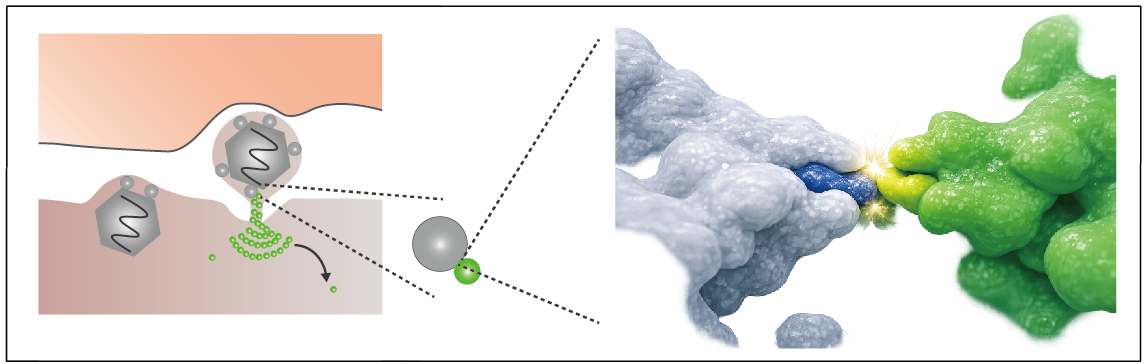
Viral replication and pathogenicity depend on specific interactions between viral and host factors. By combining structural biology approaches with molecular interaction analyses, we investigate the molecular mechanisms by which viral factors recognize host factors and modulate cellular functions. Based on the structural information obtained, we also aim to develop new antiviral strategies that target interactions between viral and host factors.